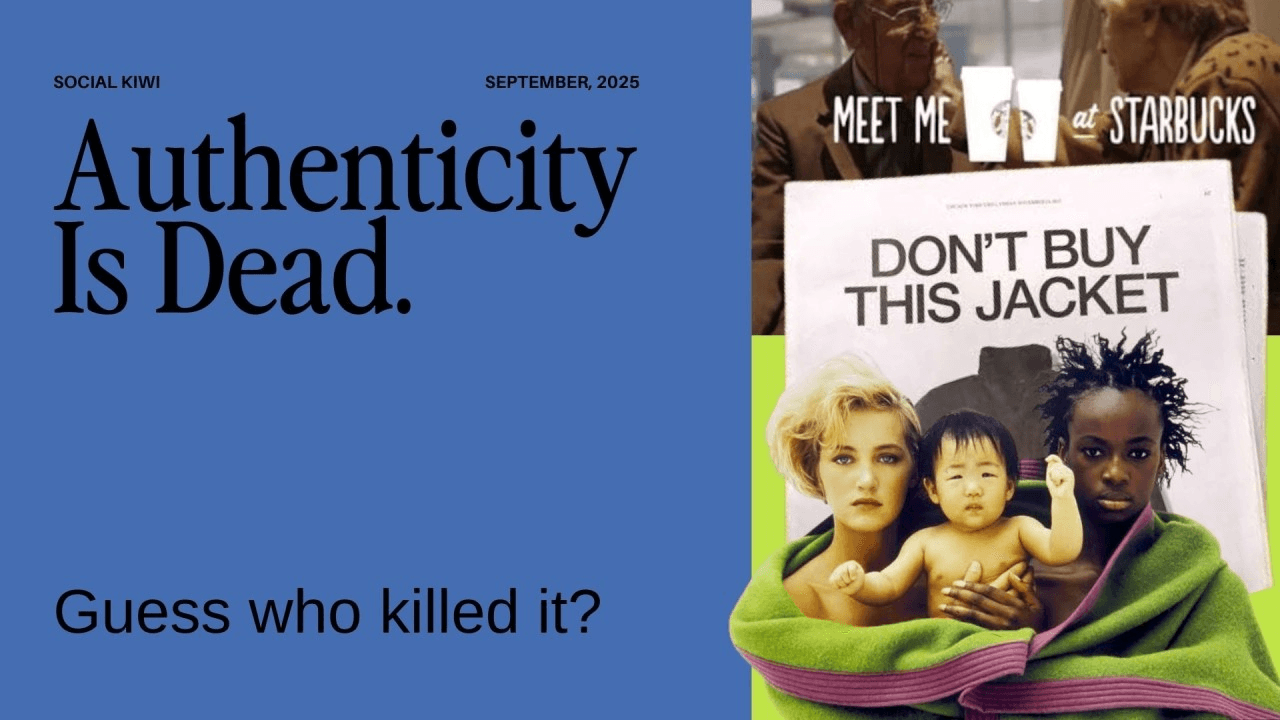
Once upon a time, authenticity wasn’t for sale. It was survival. It was a utility.
It was the quiet_ by-product_ of living your values.
Levi’s didn’t “launch a campaign.” They made jeans that miners wore until they ripped, then patched, then wore again. The durability became a myth not by design but because real people staked their lives on it.
Coca-Cola earned its place in hearts by following soldiers into World War II.
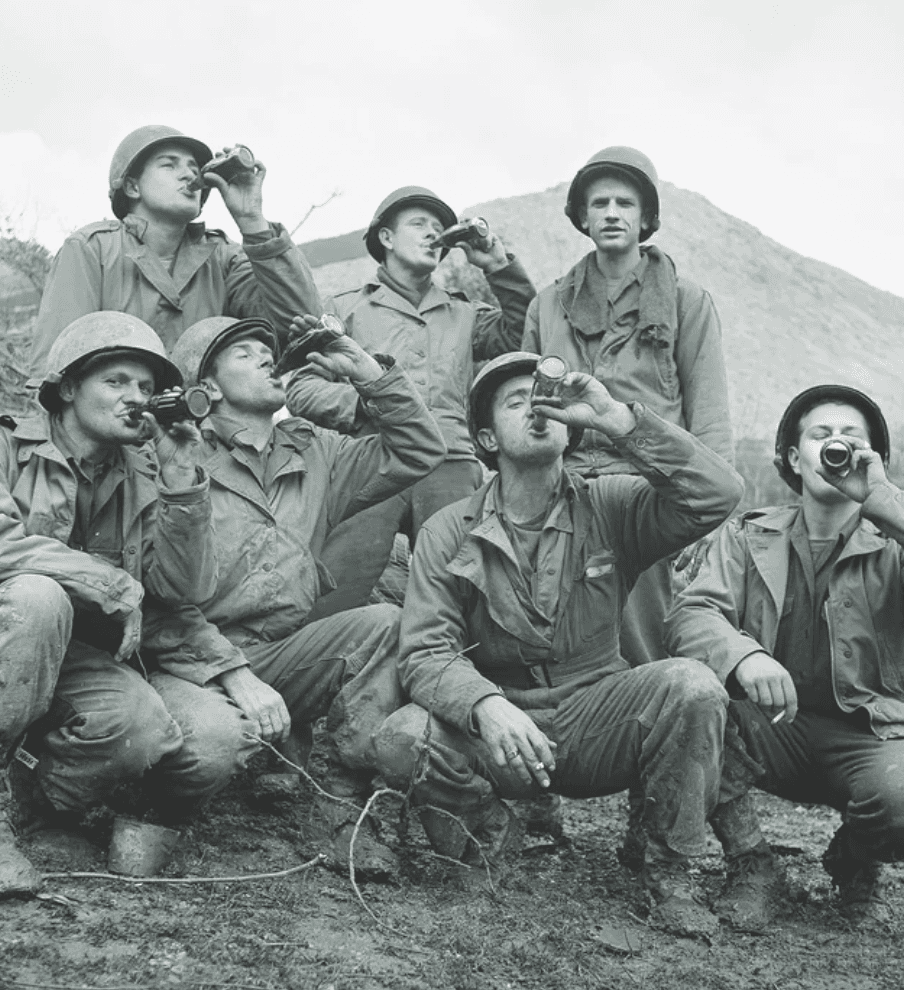
They promised every U.S. soldier, wherever he was stationed, the same 5-cent bottle. You’re in a muddy trench, shells exploding overhead, and someone hands you a Coke? Felt like home, in a bottle.
A sip of normal when everything else was chaos.
Even Marlboro, later criticised as a master of manipulation, built the Marlboro Man on the raw grit of ranchers and cowboys. It borrowed authenticity from people who lived it every day.
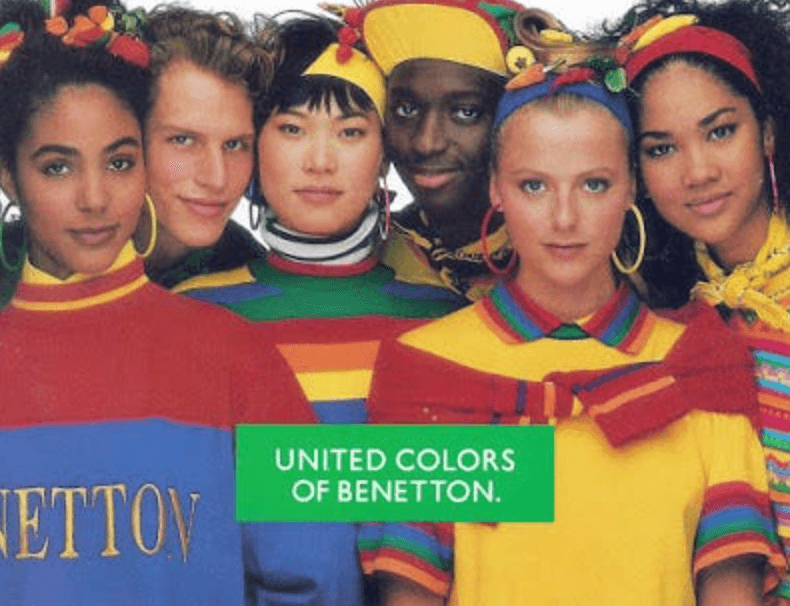
By the 1980s, Benetton blurred the line between commerce and conscience with shocking “United Colors” campaigns on AIDS, racism, and war.
By the 2010s, Patagonia went further, telling customers not to buy their jackets.
A paradoxical act of truth that made people trust them more and, ironically, buy more too.
Back then, authenticity came unpolished. It was either a by-product of function or a jarring break from the expected.
Somewhere between activism and algorithms, authenticity stopped being natural.
It became a business model.
Now it is all staged, monetised, and measured in CPM….
**Organic shows up with makeup on. **
Far from looking polished, the performance is starting to look relatable now. Practice enough, even reliability can be scripted?
We are being sold intimacy, vulnerability, and imperfection, all rehearsed to appear spontaneous.
GoPro thrives on raw user clips, but the viral ones come from sponsored athletes with planned shoots, edited to pass as spontaneous.
Skincare influencers posting ‘unfiltered’ routines? Shot under perfect key lights.
Why does it sell?
The product isn’t the story. The act of faking spontaneity is.
A glossy ad with soaring violins? Swipe. But a brand manager recording a late-night voice note, slightly rambling, slightly unpolished, suddenly we lean in.
A crack draws us closer. Rough edges feel real.
We’ve trained audiences to sniff out corporate polish like bad perfume. The only thing that cuts through is chaos.
And chaos, conveniently, can be monetised.
The Collapse of ‘Real’
The illusion of being real cannot survive too much light. The second it looks rehearsed, the spell breaks.
Shein staged a “factory transparency” tour, and the internet tore it apart. Pepsi tried to borrow the language of protest with Kendall Jenner and became a meme.
The shelf life of rawness is shorter than that of any other brand asset. One false move and it vanishes.
**But why did authenticity become currency? **
Institutions once carried trust. Media, governments, and even brands had authority baked in. That scaffolding has eroded.
People now believe influencers over experts and confessionals over press releases. Trust migrated from institutions to individuals, from consistency to personality.
At the same time, platforms rewired the rules. TikTok, Instagram, and YouTube all reward immediacy and intimacy. A shaky iPhone clip can outpace a million-dollar film.
Algorithms do not care for polish. They reward whatever feels human, even if it is just someone ranting in their car.
Then came the collapse of attention.
Ads vanish with a thumb swipe before they even register. Traditional storytelling, with its sweeping arcs and glossy endings, feels like a period drama no one wants to sit through.
And finally, scarcity. Authenticity feels rare in a world of endless filters and carefully stacked photo dumps.
What began as a natural expression is now the last reliable lever for reach, trust, and cultural relevance.
The final question:
Where do you draw the line? Too staged feels fake. Too raw feels reckless.
The truth lives in the tension.
The brands that survive are not the ones shouting, “We are authentic.” They are the ones whose lives, products, and cultures can stand scrutiny without collapsing.
They don’t over-polish the cracks, and they don’t turn flaws into spectacle.
**It is rhythm. **
Vulnerability only when it matters. Process only when it reveals something real. Honesty that risks something without reducing pain to a prop.
And sometimes, the most authentic thing you can do? Stop trying to look authentic.
Like what you see?