We were at the DesignUp™ Conference in Bangalore earlier this month. The team walked out with a thought we're still sitting with: relevance beats creativity.
What we found in a hall buzzing with a thousand creative minds is that design is splitting into two very real, yet distinct, futures that are unfolding simultaneously.
THE NETFLIX THING
You know how Netflix turned 100 million people sharing passwords into paying customers? That was behavioral design at scale. Using verification codes, device tracking, and carefully framed language to turn freeloading households into a $2.3 billion profit surge.
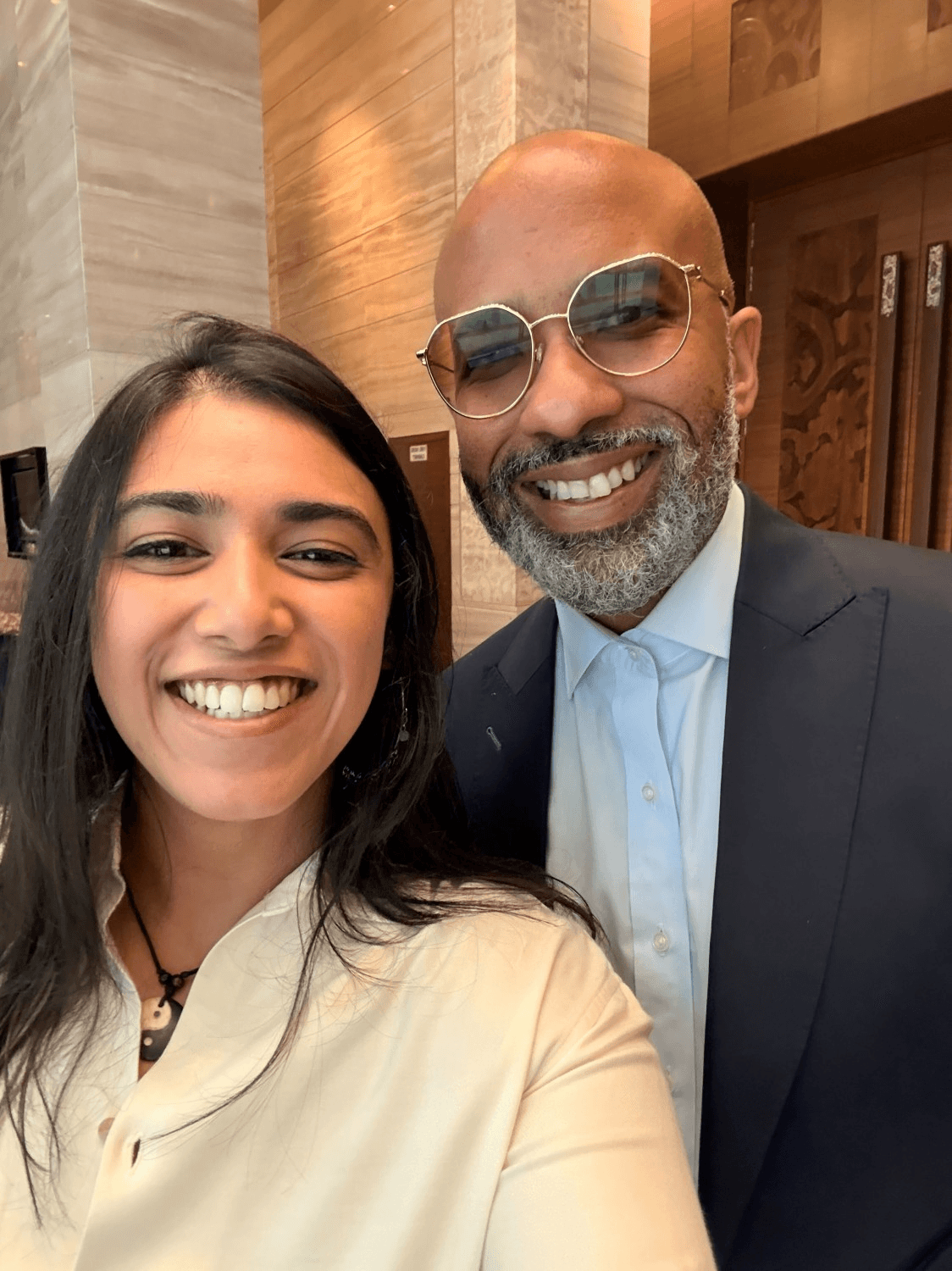
Fonz Morris, EMBA, the guy who led growth at Netflix, was in attendance at DesignUp. He walked us through the strategy for architecting choices.
The entire strategy was operationalized throughout every part of Netflix's product experience, with constant iteration and improvement. Design as invisible infrastructure. Design as revenue engineering.
Fascinating. Slightly unnerving.
In the same venue, literally the same day, Noopur Datye from Ek Type was talking about bringing voice to South Asian scripts. Working with Devanagari, Bengali, Gujarati, and Gurmukhi, designing typefaces across sixteen regional writing systems that carry centuries of cultural memory.
She spoke about letterforms the way someone talks about heirlooms. Every type has an intention, a reason, and carries an identity.
Two talks. Two visions of what design is. Both called "design."
SO WHAT'S THE SPLIT?
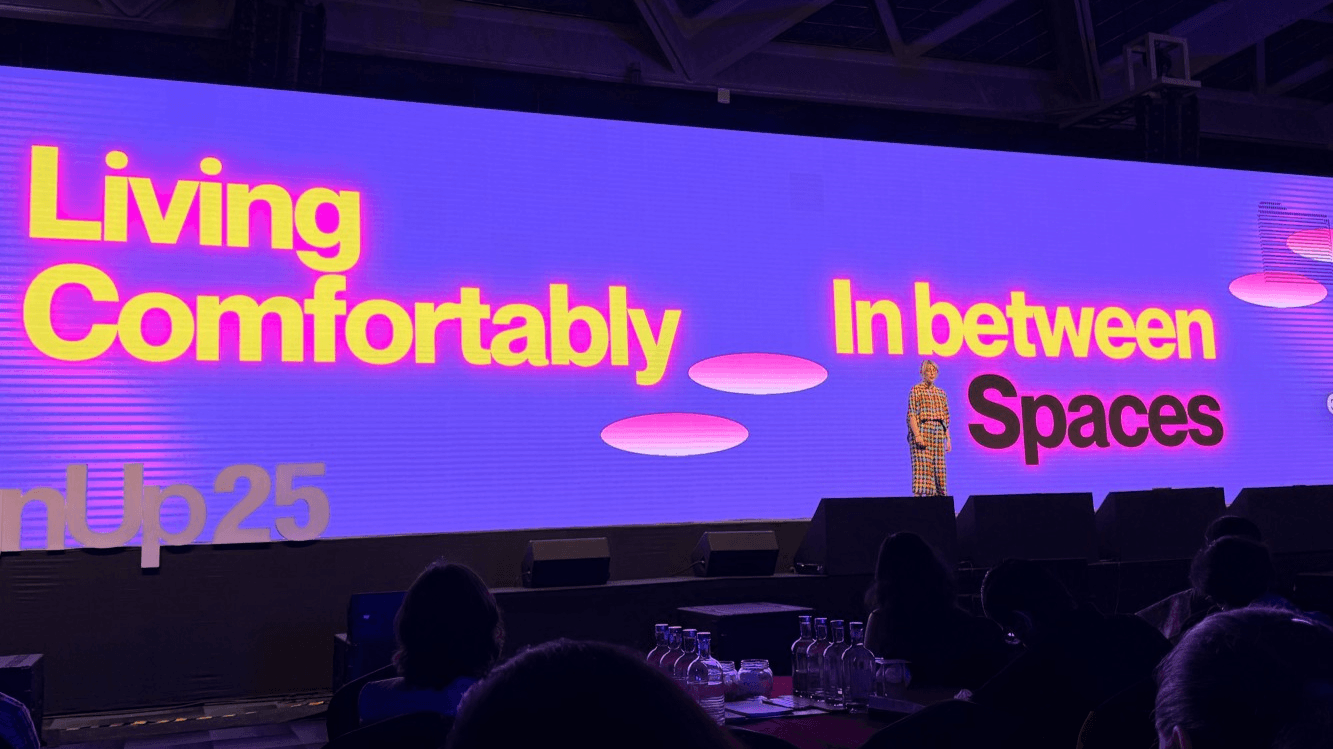
On one side, design that optimizes, nudges, scales. That turns behavior into metrics and metrics into growth. How do we encourage people to take desired action?
The other: design that preserves, amplifies, connects. How do we honor what already exists and give it a louder voice?
There was another layer to this that came up across multiple sessions. The future where your personal AI handles the mundane stuff. Booking flights. Ordering groceries. Making choices on your behalf. Tech talking to tech.
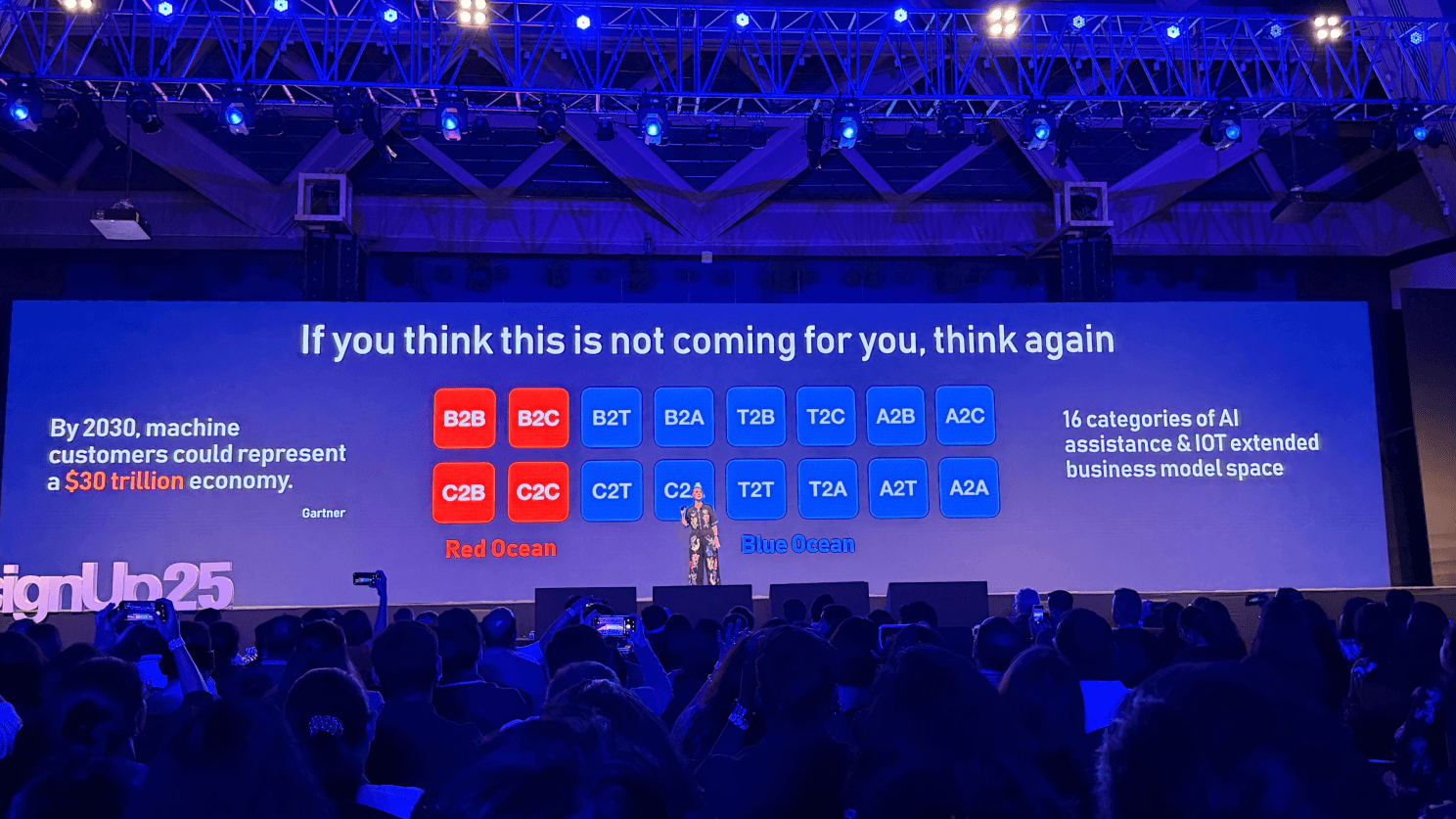
Brands won't be marketing to you anymore. They'll be marketing to your agent, who makes choices based on efficiency, not emotion.
Where does that leave us?
BUT WAIT
If the future is algorithms negotiating with algorithms, what's the point of the work we do?
That question hung in the air through most of the summit. Until you realize it's been answered differently depending on who you ask.
Madhushree Kamak turned museums into a UX problem. Wayfinding, emotional cues, and spatial design that make physical spaces feel less like temples and more like conversations.
Khushboo Agrawal stripped away the performative bits of "inclusive design" and showed what it actually looks like when you design with people instead of around them.
@Catalina Estrada closed the event with work that has delivered thousands of school kits to Indigenous communities in the Amazon, proof that design doesn't have to choose between beauty and impact.
Three different designers. Three different approaches. Same underlying belief: design still matters when it's solving for humans, not just systems.
Which brings us back to the uncomfortable part.
WHAT WE'RE SITTING WITH
If AI handles the output, automation takes care of execution, and efficiency becomes the default, job changes. We become the editorial layer. The ethical filter. The ones who decide what deserves to exist in the first place.
DesignUp gave us a mirror.
The future of design isn't about choosing sides. They both co-exist and matter equally.
Naturally, it boils down to knowing when to optimize and when to add soul. When to trust the data and when to trust your gut.
WHAT'S NEXT
We'll be diving deeper into some of these tensions in upcoming editions.
How do you design for agents rather than individuals? What does cultural preservation look like in a world optimized for scale? Can you be commercially successful while doing social good, or is that just branding?
For now, we're sitting with the discomfort.
Because that's where the real design work begins.
_P.S. Massive thanks to _Yash Deshpande _from PhonePe for hosting what our team called "the most fun workshop." His deck felt like a meme and a masterclass had a baby. To _Alex Skougarevskaya _from Canva for talking about the emotional tax of being both designer and project manager (and for handling those backstage sound issues with such grace, it became a design lesson in real-time). To _Roshan Abbas for reminding us that failure isn't the end of the story. It's the plot twist that makes it worth telling. And to everyone else who reminded us that design still matters. We just need to keep asking ourselves what we're designing for.
UNPEELED is Social Kiwi's weekly newsletter where we observe, question, and occasionally overthink the creative industry. If you're reading this because someone forwarded it, SUBSCRIBE HERE
Like what you see?