Weddings look like celebrations.
Zoom in and you will realise they function like high stress, low sleep, emotionally funded startups with a launch date nobody can move.
This week’s Unpeeled began when one of our team members found herself drowning in a group chat titled “Wedding Planning Final Final” with 147 unread messages. Three cousins typing. Two parents panicking. One vendor sending invoices at strange hours.
She came back with an insight that stopped all of us for a second.
Every wedding is an accelerated course in people, pressure, and getting things done. The exact cocktail every team drinks for a living.
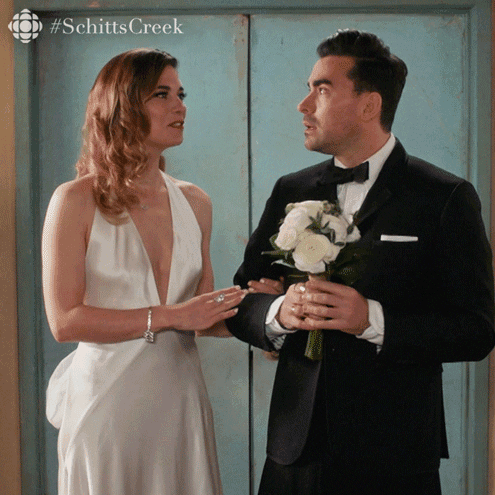
Here is why everyone who has ever worked on a team finds weddings suspiciously familiar.
Weddings seem glossy on the outside. Inside, they are structured chaos. Harvard researchers once called weddings “a peak coordination event”. It makes sense. It is one of the rare moments where fifty to five hundred humans try to operate on a shared plan that nobody has fully read.
That alone is a project management miracle.
CO FOUNDERS WITH DIFFERENT JOB DESCRIPTIONS
Every wedding begins with two people who must co-create a three-day experience. One is immersed in mood boards and memories. The other is calculating logistics and praying the mandap has proper earthing. One wants modern minimal romance. The other wants the decorator to stop sending PDFs at 2 AM.
It mirrors the earliest phase of any company. One founder dreams. One founder tracks budgets. Both hope the advisory board, also known as the parents, does not suggest a last-minute pivot.
An instance from one of our team members captured it perfectly.
The bride wanted pastel. The groom’s mother wants colourful cultural vibrance. The result was a pastel mandap with a bright marigold backdrop that nobody agreed on, but everyone accepted out of emotional exhaustion.
Classic Series A compromise.
THE GUEST LIST IS YOUR FIRST PITCH DECK
The guest list is a diagnostic tool, a social MRI.
If you want to understand relationships, just look at the spreadsheet. It shows who believes they are essential, who actually is, who gets added for optics, and who gets removed because the venue seats three hundred, but emotions require nine hundred.
A 2024 survey found that more than 60% of wedding stress comes from people and not logistics. This tracks with how teams operate.
The pitch deck reveals the same truths. What you defend shows what you value. Who you include reflects your priorities. Where you draw the line reflects your boundaries.
Startups have investors who ask questions. Weddings have investors who give instructions.
Wear traditional colours. Remove the neon lights. Add extra gulab jamun for that one uncle. Play a softer song during the entry. Not that soft. A little more emotional. No, not that emotional.
If you have ever heard investors say “think of a subscription model”, “you should expand”, or “you need to add AI”, you already know this tone.
Every family meeting is basically a board meeting with better snacks.
Cousins appear at weddings the same way temporary hires appear during a funding push. They take initiative, cause chaos, or do both within the same hour. Someone bargains with vendors as if they were raising Series B. Someone becomes the self-appointed Creative Director of the sangeet. Someone disappears right when safety pins are needed. Someone insists on drone shots but cannot fly the drone.
And there is always one who micromanages everything as if it were a competitive sport. It is unpredictable but strangely effective, which also happens to be an accurate description of many early teams.
SANGEET REHEARSAL IS TEAM DYNAMICS 101
For a genuine insight into people under pressure, watch a sangeet rehearsal.
The room quietly sorts itself out. Someone takes charge without trying, someone else becomes the behind-the-scenes fixer, a few drift in and out of interest, and the secret Beyoncé of the group refuses to rehearse but plans to shine anyway. It looks like choreography, but it is really a study in how humans organise themselves around a shared goal.
Most agency projects play out the same way. A task that seems simple becomes layered, a team that looks calm starts showing micro-cracks, and the first meltdown arrives disguised as a creative discussion.
The wedding planner is the accidental COO.
Every wedding reveals one person who becomes the operational backbone. The one who knows where everything is, who can de-escalate a tense moment, and who calls the makeup artist with the urgency of a crisis manager.
Startups have this person, too. The operator. The adult in the room. The human version of a project management tool with empathy. This person is rarely the loudest voice. They are the ones handling twenty invisible tasks before breakfast.
And the baraat? It is momentum in human form.
It has little logic and a lot of conviction. A moving crowd full of confidence, even though nobody knows which gate is correct. It is chaotic, joyful, and powerful. This is the same energy founders hope their teams capture in the final forty-eight hours before launch.
Not the commotion. The belief.
Every wedding ends the same way most launches do. A small group sits on the floor at 3.12 AM, exhausted and triumphant, whispering three familiar sentences. We pulled it off. Never again. We would absolutely do it again if needed. It is competence mixed with relief and held together by adrenaline.
WHY THIS MATTERS
Weddings are not soft occasions. They compress everything teams deal with in real life into a short, emotional, high-stakes window. Leadership gets tested, personalities collide, expectations clash, roles blur and realign, creative ideas compete for space, and timelines tighten with every passing hour.
_Emotional volatility rises and falls depending on how many relatives are in the room. _
Yet weddings stay with us because they reveal what people can build together when time is limited, emotions are heightened, and everyone cares deeply about the outcome.
For a brief moment, a group of humans constructs something larger than themselves: a memory, an experience, a story that will outlive the event.
A startup that dissolves the moment it succeeds.
Like what you see?